There’s a sentence that keeps appearing in conversations with IT leaders across every sector: “Our three-year roadmap doesn’t hold anymore.”
It’s not hyperbole. AI has changed the fundamental assumptions behind data center planning – not in some abstract future-state way, but right now, in decisions being made about power capacity, cooling infrastructure, rack density, hardware refresh cycles, and physical logistics. The organizations that are ahead of this shift are the ones treating it as a structural change, not a passing upgrade cycle.
Here’s what that actually means for the people responsible for managing and maintaining critical infrastructure.
The Scale of What’s Happening
To understand why existing infrastructure plans need revisiting, it helps to understand the sheer scale of investment underway. Global AI infrastructure spending is expected to reach between $400 billion and $450 billion in 2026, covering new data centers, semiconductor plants, and power grid expansion. This is a roughly 65 percent jump from 2024 levels and the fastest expansion in technology construction history.
This isn’t just a hyperscaler story. If you run on-prem infrastructure, lease colocation space, or manage a mission-critical environment, you’ll feel it too. The hardware standards, power requirements, and physical infrastructure expectations being set at the top of the market become the baseline for the broader industry, and that baseline is shifting fast.
Power Density Has Changed the Physics
The most immediate infrastructure challenge AI workloads create isn’t software, it’s physics. AI-optimized racks running GPU and accelerator-heavy configurations operate at power densities that conventional data center designs were never built to handle.
By 2026, power is the bottleneck everyone in AI infrastructure is watching. As AI workloads scale from pilots to production, electricity demand is rising faster than the US power grid (much of it built decades ago) was designed to handle. Traditional air cooling hits its limits at the densities modern AI workloads require. Liquid cooling (once a niche solution) is rapidly becoming the expected baseline for high-density deployments.
For IT leaders managing existing facilities, this creates a practical planning problem: the cooling and power infrastructure being used today may not be adequate for the workloads coming in the next two to three years, let alone those on the horizon.
The Grid Isn’t Keeping Up
Power availability isn’t a background concern anymore. Now it’s the reason a project gets greenlit or delayed for six months. Deloitte estimates that power demand from AI data centers in the United States could grow more than thirtyfold by 2035, reaching 123 gigawatts – up from 4 gigawatts in 2024. That trajectory is already straining regional grids in major data center markets.
Planning looks different now. Power availability is the top priority when deciding where a facility gets built, not just how much floor space or bandwidth it has. A site with great network access but a strained grid connection isn’t a viable option anymore.
Modular and Flexible Infrastructure Is Replacing Fixed Configurations
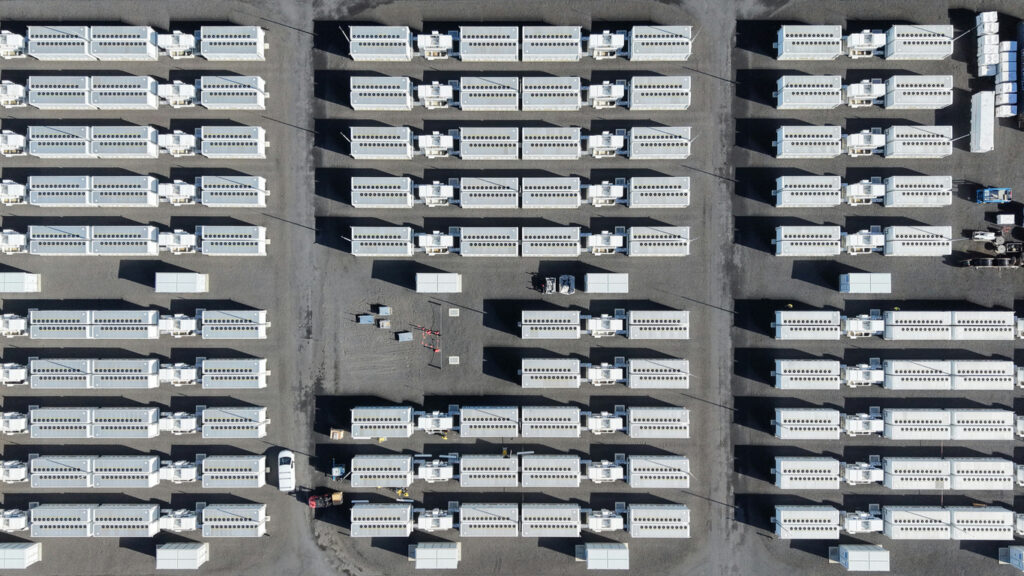
One of the clearest strategic responses emerging from this environment is the shift toward modular, reconfigurable infrastructure. When AI-driven demand spikes, organizations can’t wait 18 to 24 months for traditional construction. Modular, prefabricated data halls and power and cooling blocks are becoming the answer. And inside facilities, modular high-density connectivity and cabinet blocks let operators reconfigure layouts quickly as hardware generations change.
Infrastructure strategies that assume stable, predictable growth are increasingly misaligned with the rate of change in the underlying technology. Building flexibility into the physical environment (both in terms of design and vendor relationships) is becoming a prerequisite for organizations that need to adapt without constant full-scale renovation.
Hardware Refresh Cycles Are Accelerating
AI workloads don’t just demand more from infrastructure – they accelerate obsolescence. Hardware that was current-generation two years ago may already be inadequate for the processing demands of modern AI applications, and the pace of change in GPU and accelerator technology shows no sign of slowing.
This creates a tighter link between hardware lifecycle planning and infrastructure strategy. Organizations need to assess not just when equipment reaches end of support, but whether it remains capable of handling the workloads it will be asked to run. For mission-critical environments, that assessment needs to be continuous, not a periodic exercise tied to a fixed refresh schedule.
Tight budgets don’t make this easier. Keep running the old servers a little longer, or spend now on AI-capable infrastructure? There’s no clear answer. You need to understand the total cost of ownership and realistic performance benchmarks, as well as a logistics plan for executing refreshes without creating downtime in live environments.
Physical Logistics Become a Strategic Variable
As hardware generations turn faster and facility configurations change more frequently, the physical side of data center management (equipment moves, rack deployments, cable infrastructure, asset tracking, and decommissioning) becomes a more frequent and higher-stakes operational activity.
This is where the quality of execution matters as much as the quality of planning. In mission-critical environments, a poorly executed equipment move or deployment creates exactly the kind of unplanned downtime that every IT leader is working to avoid. Disciplined logistics – with rigorous chain-of-custody documentation, controlled sequencing, and trained teams who understand the constraints of live data center environments – isn’t optional when the stakes are this high.
Organizations that treat physical logistics as an afterthought in their AI infrastructure planning tend to discover that problem the hard way, during a cutover window that didn’t go as planned.
Sustainability Is No Longer a Separate Conversation
AI infrastructure and sustainability are increasingly in tension, and IT leaders are caught in the middle. AI workloads consume enormous amounts of power; at the same time, organizations have made public commitments to reducing their environmental footprint. In 2026, sustainability has moved beyond a compliance exercise to an architectural constraint under increasing public scrutiny, as concerns are raised about the environmental impacts of AI and big data processing.
The practical implication for IT leaders: decisions about hardware disposition, data center design, and energy sourcing are now ESG decisions as much as operational ones. Responsible decommissioning of end-of-life equipment – ensuring that retired hardware is handled securely, that data is properly destroyed, and that usable components are recycled or remarketed – is part of how organizations demonstrate that commitment in practice.
What This Means for Planning Right Now
Organizations that manage this environment well have a few things in common. They’ve revisited infrastructure roadmaps that were built on pre-AI assumptions. They’re thinking about power and cooling capacity not just for current workloads but for the ones arriving in 18 to 24 months. They’re building flexibility into physical infrastructure rather than locking into fixed configurations. And they’re treating logistics (hardware refresh execution, equipment moves, asset tracking, structured cabling) as a first-class operational discipline rather than an afterthought.
None of this requires predicting exactly where AI technology goes next. What it requires is acknowledging that the pace of change is faster than most infrastructure planning cycles were designed to handle, and then building accordingly.
For organizations operating in the DC Metro area and mission-critical environments nationwide, the infrastructure decisions being made right now will shape operational capability for years to come. The window to get ahead of the curve is open, but it won’t stay open indefinitely.