AI has changed the data center game forever. Rack densities are rising sharply. Many data centers find themselves in facilities that lack the space or power infrastructure to support their AI ambitions. That’s one big reason for data center relocation. But there are others. Whatever is driving the move, here are the top five mistakes made when moving IT equipment or shifting the data center to a new facility.
1. Dump it all and buy new
Those with very deep pockets may be willing to abandon all the gear in their old data center when they move to a new facility. They gain the latest generation of everything – and can skip the hassle of moving the old equipment to the new space. However, most organizations don’t have that luxury. Their existing hardware represents a substantial investment and the alure of all-new equipment must be balanced against financial realities. One rack of Nvidia GB200 NVL72-based servers, for example, might cost $3 million (add another $1 million for networking and storage). Rather than starting afresh, evaluate which current data center gear can provide several more years of service in an AI data center setting. When evaluating the pros and cons of buying new, remember to include the cost (in time and technical complexity) of migrating applications and data from the old hardware to the new compared to moving existing equipment, which generally only requires network configuration changes.
2. Do-it-Yourself Moves
A big mistake is to try to save pennies by doing the move yourself: Ask data center personnel to put in overtime, bring along their pickup trucks, dollies, and hand trucks, and spend a few days transporting equipment. It is a disaster waiting to happen. The willingness may be there, but the know-how and experience are not. Equipment damage is inevitable – property damage, too, as large heavy pieces of equipment have to be moved along corridors, taken up or down stairs, lifted onto trucks, and driven on busy roads to the new location. After all, highway accidents are not uncommon, and Workers Compensation claims from staff injured during the transition can result in huge unexpected expenses. And what about theft on route? If personnel take a lunch break and leave the parking lot full of IT hardware or make a pitstop at the burger joint on the way, there is always the risk of someone grabbing some expensive servers or networking gear. This also opens the door to a data breach. What guarantee is there that all units were safeguarded in transit and the customer data was not compromised?
3. Hiring amateurs
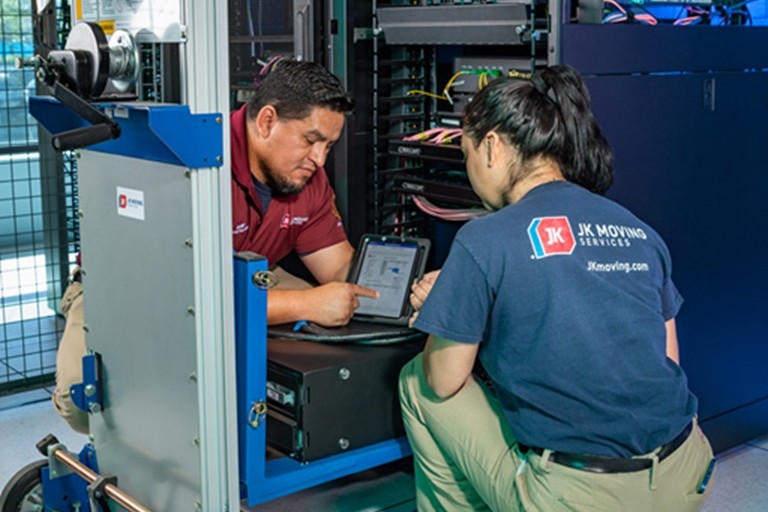
It is a big mistake to equate a data center relocation to moving house. Resist the temptation to hire residential-only movers or use one of the many “two men and a truck” apartment moving outfits out there. How will the servers and appliances be safely taken to the truck? How will they be packed, padded, and strapped down inside the vehicle to avoid damage? What about chain of custody and security, project management, timeliness, and providing enough personnel to do the job in the allotted timeframe? When it comes to IT hardware, there is no substitute for the level of management and care that professional commercial moving specialists bring to any project.
4. Downtime Miscalculation
Time is money, as they say. Those that try to schedule an equipment move over a weekend with volunteers are often surprised by the many gotchas involved. They completely misestimate the time and effort it actually takes. By Monday morning, they are stuck with half the gear in one place, have in the other, and nothing set up for production.
An idle data center is one that isn’t making money and one that will have many unhappy customers or users to deal with. At the end of the day, the cost of using professional commercial movers might pale in comparison to the lost revenue and the price tag for damaged equipment.
5. Misutilization of Personnel
Data center personnel know the workings of their facility inside out. They are experts. However, they don’t know the many details involved in safely and swiftly transporting equipment. Why burden them with the latter when they should be tasked with what they are good at:
- Deciding which data center gear should be retained for use in the new data center and what is too old or slow to be of value.
- Planning the best sequence of equipment removal.
- Figuring out how to minimize downtime during the transition by keeping operations running.
- Arranging where each piece of equipment will go in the new facility.
- Hooking up the new gear and getting the facility up and running again swiftly.
Everything else – equipment breakdown, movement, transportation, and set up – should be left to professional movers who have carried out such work efficiently hundreds of times. When they arrive with the gear and put it in position, data center personnel should be ready and waiting to hook everything up, configure it properly, and recommence operations.